 SignalBridge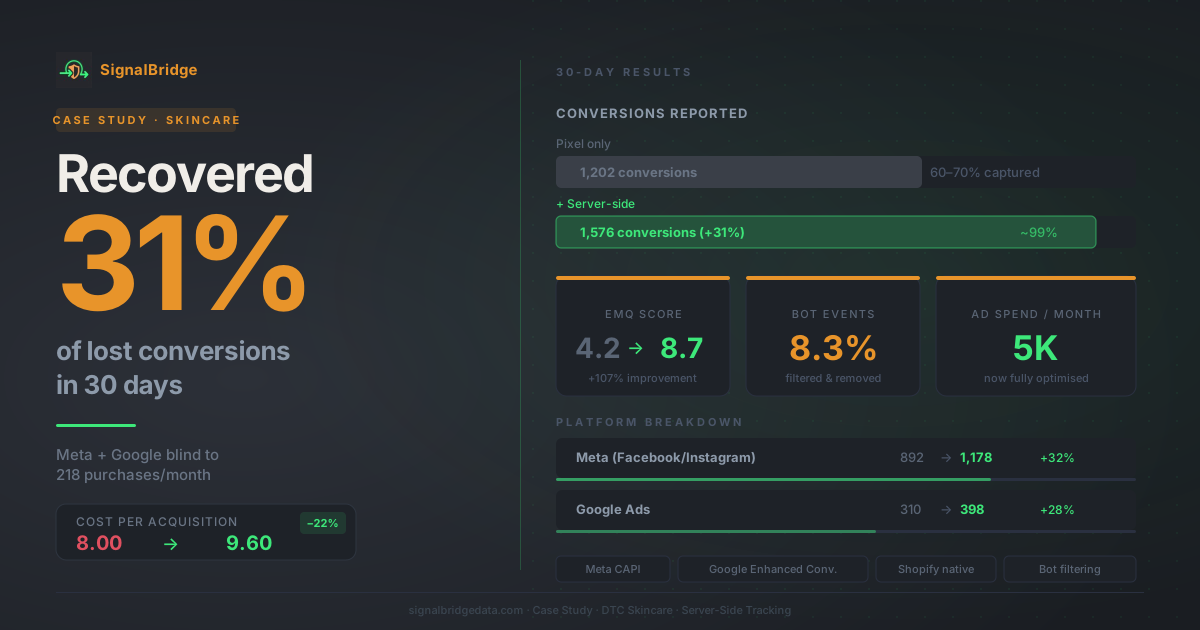
The Challenge
Company profile: A US-based DTC skincare brand selling through Shopify, with a product range of $35–$120 serums, moisturizers, and SPFs. 70% of revenue comes from paid acquisition.
Monthly ad spend: $45,000 across Meta ($32K) and Google Ads ($13K)
The problem: The marketing team noticed a persistent gap between Shopify orders and reported conversions:
| Metric | Shopify | Meta Reported | Google Reported | Combined Reported |
|---|---|---|---|---|
| Monthly purchases | 1,420 | 892 | 310 | 1,202 (with overlap) |
| Reported CPA | — | $35.87 | $41.93 | $38.00 blended |
| Revenue attributed | $98,600 | $62,440 | $21,700 | $84,140 |
218 purchases every month were invisible to ad platforms. The marketing team knew they were getting more sales than the dashboards showed, but they couldn't prove which campaigns were driving the missing conversions — which meant they couldn't scale what was working.
Why the numbers didn't add up
The brand's audience skewed heavily toward women aged 25–34 — the demographic with the highest ad blocker usage (31.6%) and overwhelming iPhone adoption. Their Google Analytics showed:
- 62% of traffic came from iOS devices
- Estimated 28% of desktop visitors had ad blockers active
- Average purchase cycle was 3.2 days (exceeding Safari's 24-hour cookie for tracked traffic)
The Facebook Pixel and Google tag were fighting a losing battle against three simultaneous blocking layers: ATT opt-outs, ITP cookie expiration, and ad blockers.
The Solution
The brand implemented SignalBridge server-side tracking in a single afternoon. No GTM changes, no developer involvement — just the pixel script install and platform API connections.
Implementation timeline
| Day | Action |
|---|---|
| Day 0 | Installed SignalBridge pixel on Shopify, connected Meta CAPI and Google Enhanced Conversions |
| Day 1 | Enabled bot filtering and event deduplication |
| Day 1–3 | Verified events flowing correctly in Meta Events Manager and Google Ads |
| Day 7 | EMQ score stabilized at 8.7 (from 4.2) |
| Day 14 | Meta campaigns began exiting learning phase faster |
| Day 30 | Full performance comparison completed |
What changed technically
Before: Shopify's client-side pixels fired in the browser. If the browser blocked the script (ad blocker, iOS restrictions, cookie expiration), the event was lost forever.
After: SignalBridge captures events server-side through a first-party subdomain. Customer data (email, phone, name) is hashed with SHA-256 before being sent to Meta CAPI and Google Enhanced Conversions. Events are deduplicated against the pixel so nothing is double-counted.
The Results
30-day comparison (before vs. after)
| Metric | Before (Pixel Only) | After (Pixel + SignalBridge) | Change |
|---|---|---|---|
| Shopify purchases | 1,420 | 1,456 | +2.5% (seasonal) |
| Meta reported conversions | 892 | 1,178 | +32.1% |
| Google reported conversions | 310 | 398 | +28.4% |
| Blended reported CPA | $38.00 | $29.60 | -22.1% |
| Meta EMQ score | 4.2 | 8.7 | +107% |
| Bot events filtered | 0 (undetected) | 121/month removed | 8.3% of events |
Where the recovered conversions came from
SignalBridge's reclaimed traffic insights broke down the source of the 286 previously invisible conversions:
| Source of Signal Loss | Recovered Conversions | % of Recovery |
|---|---|---|
| iOS ATT/ITP | 148 | 51.7% |
| Desktop ad blockers | 89 | 31.1% |
| Cookie expiration (multi-day paths) | 49 | 17.1% |
The largest recovery came from iPhone users whose conversions were completely invisible to the pixel. These were real customers who clicked an ad, browsed over multiple sessions, and purchased — but the pixel never reported any of it back to Meta.
Campaign optimization impact
With 32% more conversions flowing into Meta's algorithm, the platform could:
- Better identify high-value audiences — The algorithm now saw the full customer profile, not just the 68% who weren't blocked
- Optimize toward actual buyers — Previously, Meta was optimizing based on a biased subset of conversions (those without ad blockers or iOS restrictions)
- Exit learning phase faster — More data points per ad set meant faster stabilization
- Scale with confidence — The team could now see true ROAS per campaign and scale accordingly
Bot filtering impact
SignalBridge's bot filtering flagged and removed 121 events per month (8.3% of total events) that were being sent to Meta and Google as legitimate conversions. These included:
- Automated scrapers triggering PageView and ViewContent events
- Bot traffic from data center IPs filling out the newsletter form (triggering Lead events)
- Repeated add-to-cart events from the same session within seconds
Before filtering, these fake events were training Meta's algorithm to find more users like the bots — which meant the algorithm was partially optimizing toward non-converting traffic patterns.
Financial Impact
Monthly savings and gains
| Item | Monthly Impact |
|---|---|
| Reduced wasted ad spend (bot removal) | ~$1,200 saved |
| CPA reduction (22%) | ~$3,740 in efficiency gains |
| Revenue attributed correctly | $19,880 newly visible |
| Scaling headroom | Confident to increase budget by 25% |
Annualized impact
Over 12 months, at the same spend level, the shift to server-side tracking represents approximately $59,000 in efficiency gains — through a combination of lower CPA, better budget allocation, and removal of bot-inflated metrics.
Key Learnings
1. The gap was bigger than expected
The marketing team estimated they were losing 10–15% of conversions. The actual number was 31%. The compound effect of ad blockers + iOS privacy + cookie expiration was significantly worse than any single factor suggested.
2. EMQ is the single most impactful metric
Going from EMQ 4.2 to 8.7 changed everything. Meta's algorithm went from "partially blind" to "near-complete vision." The CPA drop was a direct result of Meta being able to match conversion events to the right users and optimize accordingly.
3. Bot filtering matters more than most brands realize
8.3% of events being fake doesn't sound dramatic until you realize those events were actively degrading campaign optimization. Removing them was like removing noise from a signal — the algorithm's output improved immediately.
4. Setup was genuinely fast
The brand had budgeted a full sprint for "tracking infrastructure overhaul." The actual implementation took one afternoon. The hardest part was waiting 30 days for enough data to draw conclusions.
FAQ
What Shopify plan do you need for server-side tracking?
Any Shopify plan works. SignalBridge installs as a lightweight pixel script — it doesn't require Shopify Plus or any special app permissions.
Did the pixel stay running alongside server-side tracking?
Yes. The pixel continues to fire for users where it works normally. Server-side tracking catches everything the pixel misses. Event deduplication ensures nothing is double-counted.
How long did it take for CPA to stabilize at the new level?
The first week showed improved conversion reporting. CPA began dropping in week 2 as Meta's algorithm incorporated the richer data. By day 30, the new CPA baseline was stable.
Could the same results be achieved with server-side GTM?
Technically yes, but the implementation would require a GTM server container, custom tag configuration, ongoing maintenance, and separate bot filtering. This brand chose SignalBridge specifically because they didn't have the technical resources for a DIY sGTM setup.
What was the total cost of the solution?
SignalBridge Growth plan at $79/month — against $45,000/month in ad spend and ~$59,000/year in recovered efficiency. The ROI was approximately 62x.
Related Reading
- Client-Side vs Server-Side Tracking: Complete Guide — understand the technical difference and why hybrid tracking delivered these results
- What is Ad Blocker Tracking Loss? — the invisible problem that cost this brand 31% of conversions
- How to Fix iOS 18+ Ad Tracking Issues — iOS privacy was the largest source of signal loss in this case study
- Case Study: B2B SaaS Doubled Meta ROAS — another real-world example, this time for lead generation
- Server-Side Tracking Benefits — the complete list of benefits demonstrated in this case study
Ready to see what your pixels are missing?
SignalBridge shows you exactly how many conversions you're losing and recovers them through server-side tracking — set up in 5 minutes, no code changes required.
Start your free trial today — no credit card required.
Related Articles
Case Study: How a Performance Agency Fixed Tracking Across 12 Clients and Saved $180K in Annual Ad Waste
A performance marketing agency managing $600K/month in ad spend across 12 e-commerce clients used server-side tracking to close conversion gaps averaging 26%, reduce blended CPA by 18%, and eliminate the monthly 'numbers don't match' client calls.
Server-Side Tracking for Google Performance Max: Why Data Quality Matters
Google Performance Max campaigns depend on high-quality conversion data. Learn how server-side tracking fixes the data gaps that cause PMax to underperform.